




Bitmanagement offers a digital factory tool program for Tarakos

Featured Case Study
Bitmanagement offers a digital factory tool program for Tarakos

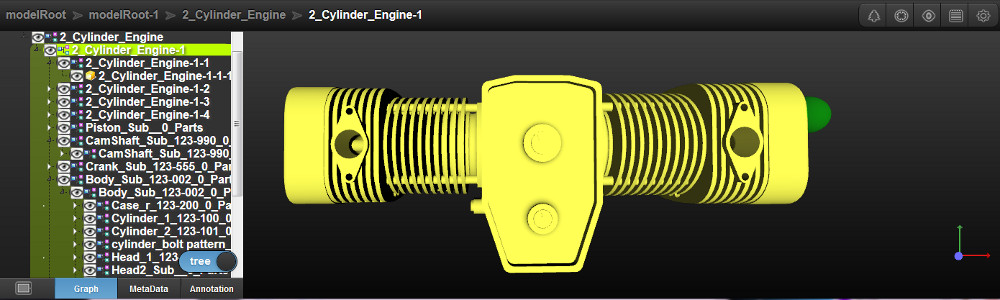
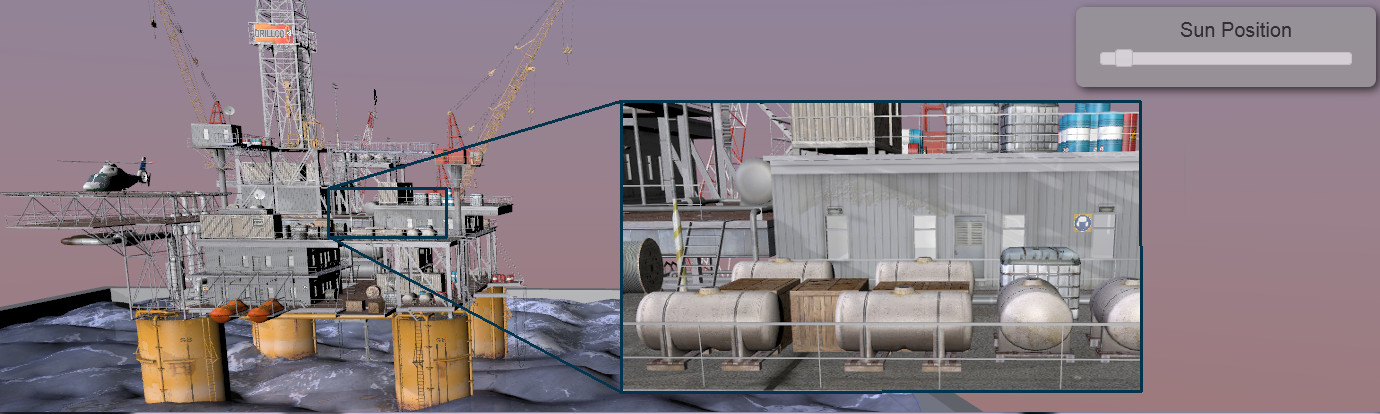
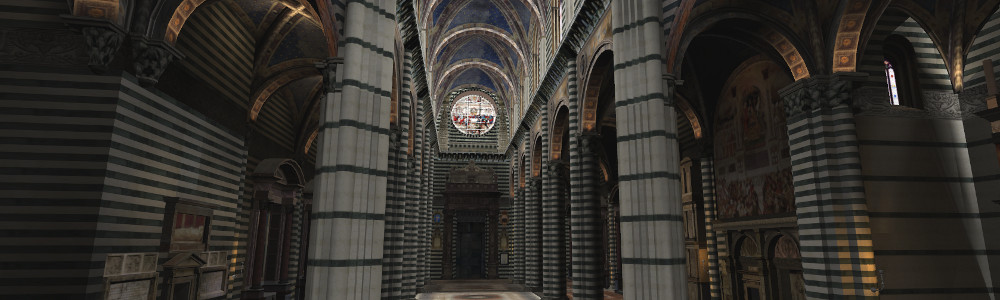
A digital factory solution offered by Tarakos, Germany, based on the visualization software of Bitmanagement. This digital factory solution has three software tools VR builder, VR control and VR viewer. VR builder is a software tool for 3D configurators and time-based simulation of conveying, material flow and storage/warehouse equipment using the virtual reality (VR) technology. The program is used to visualize and analyze plants. Its special feature is the simple and quick usage of virtual, animated 3D scenes by users with no special programming or 3D designing skills because of parametric and animated 3D models available.

Read more

What is X3D?

X3D logo

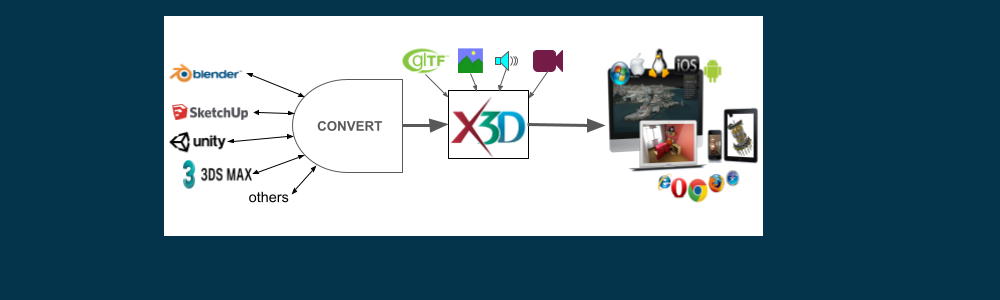
X3D is an initiative to leverage 3D as digital media as easily as we do with text and 2D graphics. It provides the technology to enable customers to view, modify, customize and reuse 3D visualizations in other applications on the web or on any network device from cell phones to supercomputers.

Get X3D

Learn all about X3D

Latest Web3D News RSS atom

General News  X3D-Earth Working Group Workshop

Jun 11, 2008

The Web3D Consortium’s X3D Earth Working Group will hold technology sessions on Friday June 27.
Host is the Naval Postgraduate School in Monterey California.

Agenda:
08:00-12:00 X3D Earth technical session for implementers
12:00-13:00 Lunch
13:00-15:00 X3D Earth project overview and live demonstrations
15:00-16:00 Future strategic goals and next steps

This is an open meeting held in parallel with International Organization of Standardization (ISO) SC-24 WG-6/8 Committee meeting. The Extensible 3D (X3D) Earth project is creating a standards-based 3D visualization infrastructure for visualizing all manner of real-world objects and information constructs in a geospatial context. Archivability of models using stable commercial tools and noncommercial international standards will ensure that 3D work can remain accessible and repeatable for many years to come. Further information online at X3D-Earth

Jun 10, 2008

It is now easier to add the sense of touch to virtual environments with X3D, Python or C++

SenseGraphics, the haptics software provider, announces the beta release of its latest version of haptics platform, H3DAPI 2.0. The open source haptics development platform will be officially released on 10 June 2008, in conjunction with EuroHaptics 2008 in Madrid, Spain.

H3DAPI has been used by the graphics and haptics community to create or add the simulation of touch to their applications. Built on the industry standards OpenGL and X3D, H3DAPI enables rapid haptics application development using X3D and Python alone. More major projects have been developed by extending H3DAPI capabilities with C++.

The improved H3DAPI 2.0 beta now uses SenseGraphics’ own haptics API, which grants users more freedom and control in haptics rendering. Users could now choose from more haptics renderers, including SensAble’s OpenHaptics, Chai3D, and H3D point and sphere-based renderers. Its modular design meant that users of the open source H3DAPI could easily extend the platform, whether it is adding their own rendering algorithms, force effects, or haptic surfaces. The latest version of H3DAPI also comes with more device support, including the range of haptic devices by SensAble, ForceDimension, Novint and MOOG FCS.

H3DAPI 2.0 is also bundled with CMake now to enable easy installation. H3DAPI runs on Windows, Linux and Mac OS.

H3DAPI 2.0 beta can be downloaded at www.H3D.org. The software is released under the GNU General Public License, with an option for commercial license.

May 24, 2008

Use your favorite 3D authoring tool, such as Autodesk® VIZ, 3ds Max®, Maya®, AliasStudio®, Cinema 4D®, modo®, SketchUp®, LightWave 3D® or any other 3D tool capable of exporting to X3D or VRML, to bring your 3D models and 3D worlds to life. Import your 3D content into WireFusion, on Mac or Windows, and have it published to the web. It’s as easy as 1-2-3. With the visual interface you can easily add advanced functionality and interactivity to your presentations, even without any prior programming or scripting skills. WireFusion is for everyone, so start sharing your ideas!

May 13, 2008

Anark Corporation announced its sponsorship of the upcoming 3D Collaboration & Interoperability conference in Denver, Colorado. Anark will demonstrate Anark Core(TM), a unique software platform that dramatically reduces repetitive CAD file conversion and preparation tasks, enabling efficient interoperability between producers and consumers of CAD data. Anark Core version 1.1 provides users with design-feature removal capabilities (parts, holes, fillets), then exports modified CAD data into high-precision BREP and lightweight mesh file formats including CATIA V4/V5, Parasolid, Pro/E, STEP, Unigraphics, IGES, Collada, DWF, X3D, and VRML. 

May 02, 2008

On May 12th, the Laboratory of Integrated Systems (LSI) of the Polytechnic School of the University of São Paulo (EPUSP), Brazil will host an Interoperability Forum in Open-Source 3D Technologies and will present an overview of X3D-Earth. This 3D Interoperability forum is an international event focusing on topics of strategic and technological importance. The event congregates national and international guests and partner entities, featuring keynote speaker Don Brutzman from the Naval Postgraduate School in Monterey, California.

The main goal is to present the current State of Art in Open Source for 3D Interoperability for discussion in international groups of standardization like the Web3D Consortium an Open source 3D standards for interoperability. The intention is to promote interest in the use, development and research of open source using the X3D open format. The objective of the X3D-Earth working group is to define a set of standards and norms for an international system of 3D globes for visualization.

The X3D-Earth project intends to create an infrastructure of open and extensible standards to visualize in three dimension objects from the real world, adding information constructs in a geospatially referenced context. The possibility of integration of the archives of models using commercial and public domain tools will guarantee that the 3D content remain accessible, usable and valid for many years. 

Apr 23, 2008

Another improved version of X3D-Edit available which includes strong support for authoring Script nodes, prototypes and fields.  Strong checks, defaults, tooltips and prompts are offered to simplify these complicated tasks.  ROUTE and IS/connect wizards reveal type and accessType (e.g. SFBool/inputOutput) so that flawed connections are directly evident, warning about mismatches.

To get X3D-Edit simply refresh your current installation, or download a copy for installation from https://savage.nps.edu/X3D-Edit

New features include:

• An option under ProtoDeclare to insert a new Script node with all of the field declarations (minus default values) plus IS and connect tags.

• A feature is in the PixelTexture editor, which now allows you to select an image file for conversion into embedded pixel values.

• New plugin:  Jordi Cardona’s X3DV code colorization plugin works compatibly, allowing basic editing and palette drag & drop for .x3dv classic VRML files. Reportedly VRML97 support will follow.  Install into X3D-Edit via https://savage.nps.edu/X3D-Edit/#Plugins

• New examples:  Morphing dolphin, created by Chris Lang, Monterey High School class of 2008.  Online at https://savage.nps.edu/Savage/Biologics/Dolphin/index.html
https://savage.nps.edu/Savage/Biologics/Dolphin/DolphinSwitcher.x3d
https://savage.nps.edu/Savage/Biologics/Dolphin/DolphinMorpher.x3d

Development is under Windows and MacOSX, and now also testing under Linux RedHat Fedora 8.

If you install the chat feature, you can join the X3D chat room.
A few weeks ago shared files were jointly edited, connecting from NPS lab in Monterey Bay, California to Chris Thorne in Australia.
https://savage.nps.edu/X3D-Edit/XmppChatCollaborationModule.html

Upcoming:

• Geospatial component

• The new Xj3D version with editing/validation/import/viewing support for Collada 1.4.1. http://www.khronos.org/collada

Apr 23, 2008

April 24-25, 2008
National Defense University
Washington, DC

Federal Virtual Worlds Expo: Implementing the Future
The Federal Consortium for Virtual Worlds is a group of federal government employees and contractors interested in exploring the use of virtual worlds in government, sharing best practices and policies, creating shared repositories, and networking.


Apr 18, 2008

The X3DV Module Suite is a free set of modules to code in X3D, the open standard for interactive and immersive 3D on Internet. With it, you can create virtual worlds in 3D, using the great edition features of Netbeans. A new module has been added: support for VRML syntax highlighting, new file wizard, vrml icons, etc.

View X3D today!

Member Login


Username:

Password:

Not yet a member?

Book hilight

More books...

Useful Links

del.icio.us / web3d

Bookmarks of what Web3D Board members find interesting on the Web at http://del.icio.us/web3d/